
The Maldives, briefed properly
Visas, transfers, taxes, monsoons and local custom — the practical ground an agent needs before quoting, written by the people who handle these arrivals every day.
- 26
- Atolls
- 1,192
- Islands
- 30
- Day visa on arrival
The quick answers
- CapitalMalé
- LanguageDhivehi · English widely spoken
- CurrencyMaldivian rufiyaa (MVR), pegged to USD
- Time zoneGMT+5 (resorts often run +1)
- Dialling code+960
- Visa30 days on arrival, all nationalities
- Mobile networksDhiraagu · Ooredoo
- AirportVelana International (MLE), Hulhulé
01The country in short
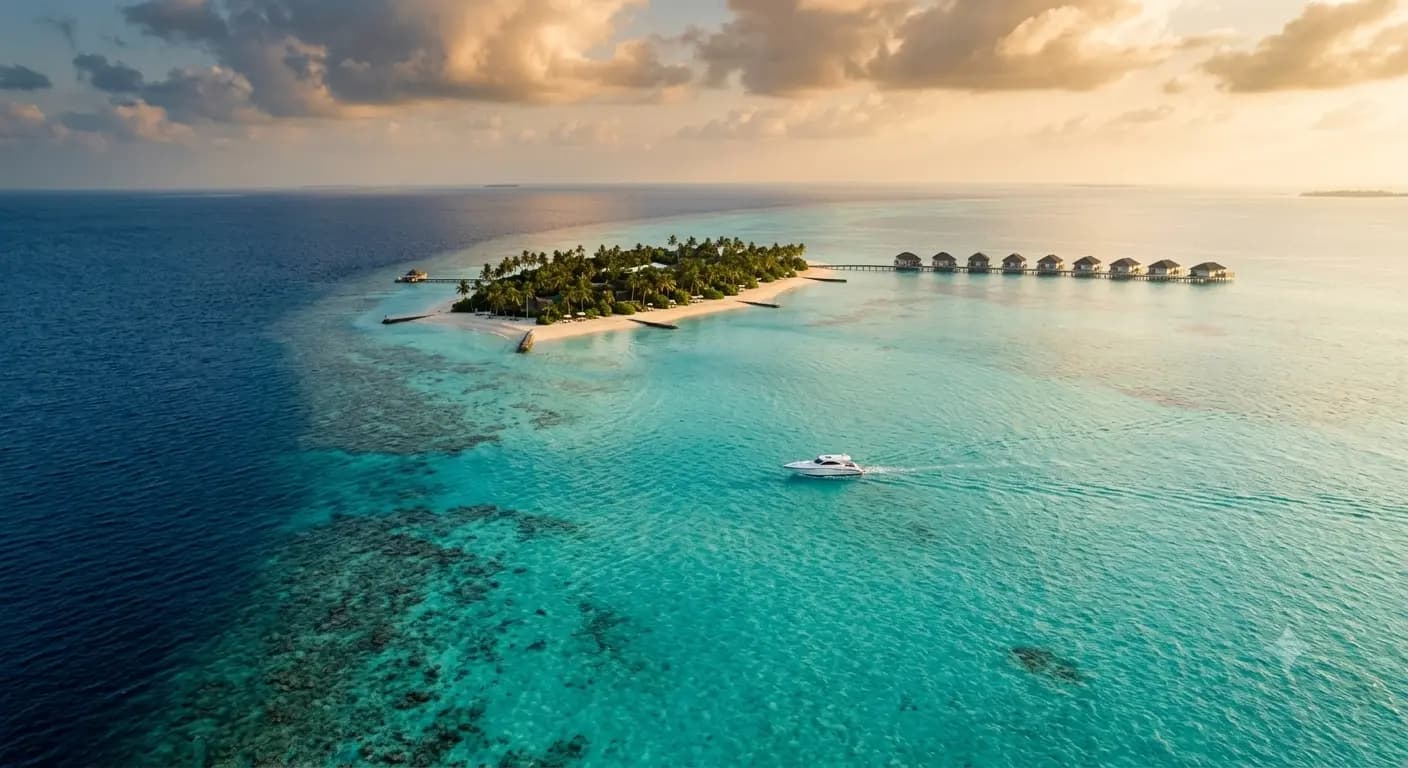
The Maldives is a chain of 26 natural atolls in the Indian Ocean, made up of roughly 1,192 coral islands ringed by reef that supports more than 2,000 recorded marine species. Around 188 islands are inhabited; the rest are uninhabited or given over to a single resort.
The population is a little over half a million, and more than 200,000 of them live in Malé — one of the most densely populated cities in the world, and a striking contrast to the empty water your clients see from the seaplane twenty minutes later.
Tourism began in 1972 with two resorts. There are now over 150, and the licensing of guesthouses on inhabited islands has opened a second, far more affordable tier that did not exist a decade ago.
02Getting there and getting around
Almost every international arrival lands at Velana International Airport (MLE) on Hulhulé, next to Malé. From there the onward journey is one of three things:
- Speedboat — the norm for resorts within roughly an hour of the airport. Runs at any hour, weather permitting.
- Seaplane — for atolls beyond speedboat range. Daylight only, and the carrier confirms departure times the day before travel, so a firm timing cannot be given at booking.
- Domestic flight plus boat — for the far north and south. Flights serve a dozen domestic airports, with a short transfer at the other end.
Public ferries connect Malé with many inhabited islands at very low cost, but they run to a limited schedule and are rarely suitable for a client with a same-day international connection.
Build in generous connection time. Seaplanes in particular do not wait for delayed inbound flights, and a missed rotation can mean an overnight in Malé.
03Visas and entry
Every nationality receives a free 30-day visitor visa on arrival. To be issued it, travellers need a passport valid for at least six months, a confirmed accommodation booking, and onward or return tickets.
An online arrival declaration (Imuga) is required within 96 hours of travel in each direction. Confirm the current requirement close to departure — it has changed more than once since it was introduced.
04Money and taxes
The Maldivian rufiyaa is pegged to the US dollar. In practice resorts, guesthouses and excursion operators price and settle in dollars, and major cards are accepted everywhere your clients are likely to be. Rufiyaa is really only needed for local shops and ferries.
Two government charges apply on top of published rates: a goods and services tax on tourism (TGST), and a green tax charged per person per night, at a lower rate for guesthouses than for resorts. Both are set by government and change from time to time, so we state the exact rates in force on every quotation rather than publishing a figure here that may be out of date by the time you sell it.
Service charge is normally added by the property and shown separately. Tipping beyond it is discretionary.
05Weather and seasons
It is hot all year — temperatures rarely drop below 25°C — and the year divides into two monsoons rather than into hot and cold.
Iruvai, the north-east monsoon (November to April) is the dry season: calm seas, clear water and the best visibility for diving. It is also peak season, with peak rates and the longest cancellation windows.
Hulhagu, the south-west monsoon (May to October) brings wind, short heavy showers and livelier water. Rates fall sharply, the surf works, and plankton draws manta rays and whale sharks — so for the right client it is the better trip, not the compromise.
06Culture and local customs
The Maldives is a Muslim country and Islamic custom shapes daily life on inhabited islands. On a resort island, which is private, normal resort dress applies. On an inhabited island — including guesthouse islands and Malé — clients should cover shoulders and knees, and swimwear is limited to designated bikini beaches.
Alcohol cannot be imported and is not served on inhabited islands. It is available at resorts and on liveaboard vessels. Clients booked into guesthouses should be told this before they book, not after.
Ramadan shifts daily rhythms on local islands — restaurant hours, ferry timetables and excursion availability all change.
07What to pack
Cotton and linen, a hat, and reef-safe sun cream — the sun is stronger than most visitors expect. Sandals are worn everywhere and taken off constantly; many resorts are barefoot by design.
Modest cover-ups for inhabited islands, a light layer for air-conditioned interiors and the boat ride home after dark, and a dry bag for anything that must not get wet on a transfer. Seaplane baggage allowances are lower than international ones, so flag that early.
08Connectivity
Prepaid SIMs from Dhiraagu and Ooredoo are sold in the arrivals hall and cover the inhabited islands and most resort areas. Every resort has Wi-Fi, generally free in villas and public areas. eSIMs work with both networks. Signal at sea between atolls is patchy — worth mentioning to clients expecting to work from the water.
09Health and insurance
No vaccinations are required for entry from most countries. Malé has the main hospitals; resorts carry a doctor or nurse, and remote atolls rely on the regional hospital network.
Insurance is not optional in practice. A serious problem on a remote island means a seaplane or speedboat evacuation, and divers need cover that specifically includes diving and hyperbaric treatment. Make sure your clients hold a policy covering medical treatment, evacuation, cancellation and curtailment.
Something your client has asked that is not covered here? Send it to [email protected] — if it comes up twice, it goes on this page.
Put the guide to work
Send the dates and the brief, and we will come back with properties, transfers and the taxes of the day already built into one figure.